

Puliyogare is one of Karnataka's most iconic rice dishes — a tangy, spiced tamarind rice that's a temple offering, a school lunch box staple, and a comfort meal all at once. The name comes from "puli" (tamarind) and "ogare" (rice), and the flavour is a perfect balance of sour, spicy and slightly sweet.
Making authentic puliyogare from scratch takes time — you need to make the gojju (the tamarind-spice paste) separately, which involves roasting and grinding spices. But with a ready Puliyogare Gojju, you can have the full flavour on the table in under 20 minutes.
What Is Puliyogare Gojju?
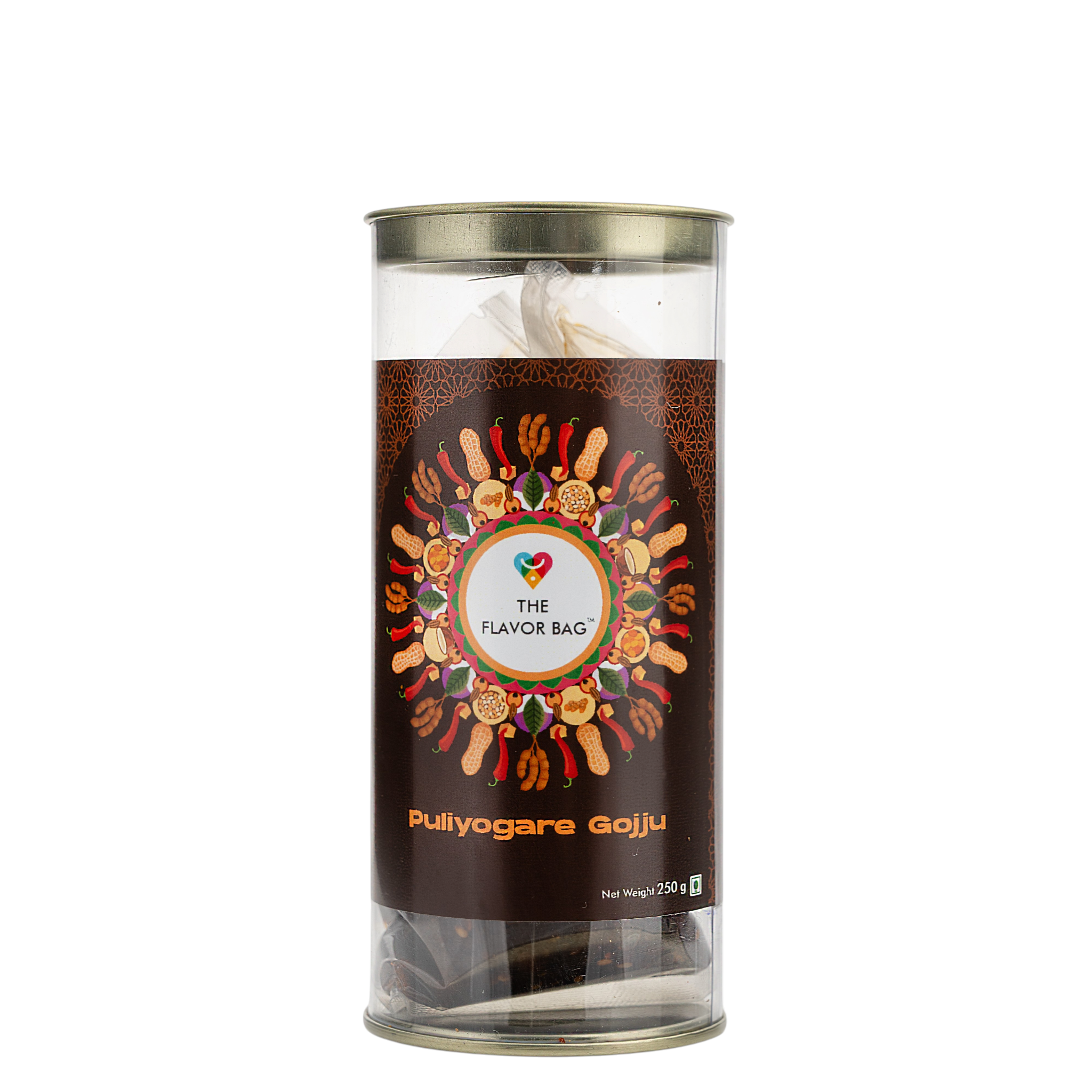
Gojju is the concentrated tamarind-spice paste that's the soul of puliyogare. A good gojju contains tamarind, jaggery, byadgi red chilli, mustard seeds, curry leaves, sesame and a blend of ground spices. It's cooked down to a thick, dark paste that can be stored for weeks and mixed into rice whenever you need it.
In Karnataka homes, making gojju is a once-a-month ritual — a big batch made and stored in a ceramic jar to be used across multiple meals. Our Puliyogare Gojju is made exactly this way, in small batches without preservatives.
Puliyogare Recipe (Using Puliyogare Gojju)
Serves: 2–3 | Time: 20 minutes
Ingredients
- 2 cups cooked rice (short-grain or sona masoori works best, cooked and cooled)
- 3–4 tablespoons Puliyogare Gojju (adjust to taste)
- 1 tablespoon sesame oil or refined oil
- 1 teaspoon mustard seeds
- 1 teaspoon urad dal
- 8–10 curry leaves
- 2 dried red chillies
- Salt to taste
- 2 tablespoons roasted peanuts (optional, for crunch)
Method
- Start with cooled rice. This is important — hot or freshly cooked rice will become mushy. Spread the cooked rice on a plate and let it cool to room temperature.
- Temper the spices. Heat oil in a pan over medium heat. Add mustard seeds and let them splutter. Add urad dal and fry until golden. Add curry leaves and dried red chillies and fry for 30 seconds.
- Add the gojju. Add 3–4 tablespoons of puliyogare gojju to the pan and stir for a minute to warm it through. Taste and adjust — if you want it more tangy, add more gojju; if it's too intense, you can dilute slightly.
- Mix with rice. Add the cooled rice to the pan and mix gently but thoroughly until every grain is coated. Add the roasted peanuts if using.
- Rest for 5 minutes. Let the puliyogare sit for 5 minutes before serving — this allows the gojju to soak into the rice properly. The flavour deepens as it sits.
Tips for Perfect Puliyogare
- Use aged rice if possible — short-grain rice that's a day old holds up better to mixing than freshly cooked rice.
- Don't skip the tempering — the mustard, curry leaves and dal add crunch and freshness that balances the heavy gojju.
- Peanuts are optional but recommended — they add a roasted, nutty contrast to the tartness of the tamarind.
- Taste as you go — gojju strength varies. Start with 3 tablespoons for 2 cups of rice and adjust to your taste.
What to Eat Puliyogare With
Puliyogare is a complete meal on its own, but it pairs beautifully with:
- Curd rice — the classic combination. The cooling curd rice balances the tangy heat of puliyogare.
- Papad — a crispy papad adds texture contrast.
- Pickle — a small piece of lime pickle or amla pickle alongside puliyogare is a traditional pairing.
Get Authentic Puliyogare Gojju
Our Puliyogare Gojju is made in small batches using traditional Karnataka recipes — real tamarind, jaggery, byadgi chilli, and no artificial preservatives. One jar makes 6–8 servings of puliyogare.
We also make Puliyogare Mix — a dry spice blend version for those who prefer to add their own tamarind.
Looking for more South Indian pantry essentials? Browse our full range of Chutney Powders and Traditional Spice Mixes.

